Every lesson in Orton-Gillingham is organized around a consistent set of strategies, activities, and patterns. The student always knows what to expect throughout each lesson.
Evidence-Based Literacy
What is the Orton-Gillingham Approach?
Structured and sequential instruction
Multisensory and explicit teaching
Individual pacing with ongoing review
The Orton-Gillingham Approach is a direct, explicit, multisensory, structured, sequential, diagnostic, and prescriptive way to teach literacy when reading, writing, and spelling do not come easily to individuals, such as those with dyslexia. It is most properly understood and practiced as an approach, not a method, program, or system. In the hands of a well-trained and experienced instructor, it is a powerful tool of exceptional breadth, depth, and flexibility.
The essential curricular content and instructional practices that characterize the Orton-Gillingham Approach are derived from two sources: first from a body of time-tested knowledge and practice that has been validated over the past 80 years, and second from scientific evidence about how individuals learn to read and write; why a significant number have difficulty in doing so; how having dyslexia makes achieving literacy skills more difficult; and which instructional practices are best suited for teaching such individuals to read and write.
How the Method Works
Applying the Approach
The Orton-Gillingham Approach is most often associated with a one-on-one teacher-student instructional model. Its use in small-group instruction is not uncommon. A successful adaptation of the Approach has demonstrated its value for classroom instruction. Reading, spelling, and writing difficulties have been the dominant focus of the Approach although it has been successfully adapted for use with students who exhibit difficulty with mathematics.
The Orton-Gillingham Approach always focused on the learning needs of the individual student. Orton-Gillingham (OG) practitioners design lessons and materials to work with students at the level they present by pacing instruction and the introduction of new materials to their individual strengths and weaknesses. Students with dyslexia need to master the same basic knowledge about language and its relationship to our writing system as any who seek to become competent readers and writers. However, because of their dyslexia, they need more help than most people in sorting, recognizing, and organizing the raw materials of language for thinking and use. Language elements that non-dyslexic learners acquire easily must be taught directly and systematically.
The Founders
Foundations of the Approach
The Approach is so named because of the foundational and seminal contributions of Samuel T. Orton and Anna Gillingham. Samuel Torrey Orton (1879-1948) was a neuropsychiatrist and pathologist. He was a pioneer in focusing attention on reading failure and related language processing difficulties. He brought together neuroscientific information and principles of remediation. As early as 1925 he had identified the syndrome of dyslexia as an educational problem. Anna Gillingham (1878-1963) was a gifted educator and psychologist with a superb mastery of the language. Encouraged by Dr. Orton, she compiled and published instructional materials as early as the 1930s which provided the foundation for student instruction and teacher training in what became known as the Orton-Gillingham Approach.
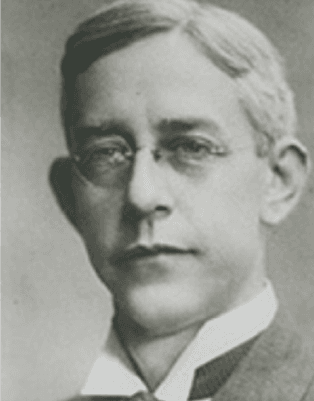
Samuel Torrey Orton
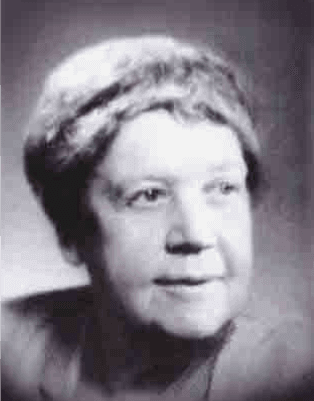
Anna Gillingham
Core Principles
The Principles of the Orton-Gillingham Approach
Each skill is taught in a logical sequence. Students begin with simpler word patterns and progress gradually to more complex concepts including vowel patterns, multisyllabic words, spelling rules, affixes, and morphemes.
Each lesson builds on previously taught skills. Students continue to review earlier material while learning new material so knowledge moves into long-term memory.
The instructor teaches directly and does not assume what the student already knows. Lessons are highly interactive and include continuous teacher-student engagement.
Instruction engages auditory, visual, and tactile pathways. This helps students build stronger and more lasting learning connections.
Learners move from foundational alphabetic principles to more advanced patterns, understanding how speech sounds map to written language.
Further Reading
Reference
Source and further reading
https://www.ortonacademy.org/resources/what-is-the-orton-gillingham-approach/
Ready to Begin?
Contact Us
Have questions? Connect with a Literacy Arena expert.
No-pressure consultation. Parent briefing included.